Malawi Council of Churches (MCC) has expressed deep concern over an impasse that risks Malawi failing to unlock $437.9 million (about K766 billion) from the Global Fund to fight Aids, tuberculosis and malaria.
In a statement on Saturday, MCC board chairperson Reverend Billy Gama said the delay threatens community well-being.
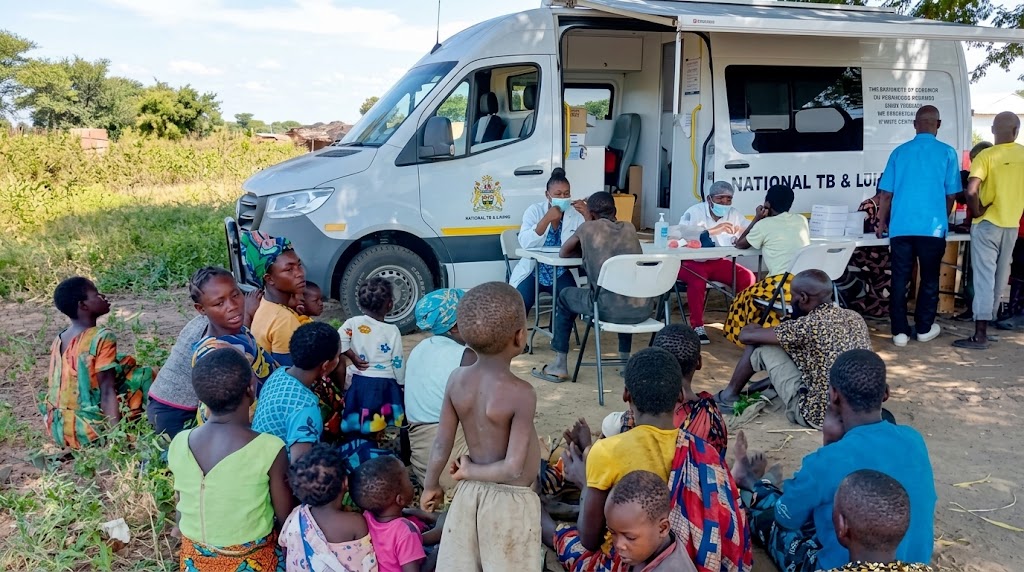
“These funds are not merely financial allocations; they represent hope, health, and life for millions of Malawians who depend on timely interventions,” Gama said.
The Nation’s exclusive on Friday reported that communication of the stalling of a key decision to replace World Vision Malawi with ActionAid Malawi as the community principal recipient (PR) threatens Grant Cycle 8 (GC8).
At stake is $339.6 million (about K594 billion) for HIV, $82.2 million (about K143 billion) for malaria and $16.1 million (about K28.1 billion) for TB and Resilient and Sustainable Systems for Health—over 60 percent of disease programme financing—to cover July 1, 2027 to June 30, 2030.
The health sector is already under strain from USaid cuts, subdued domestic revenue and rising public debt hovering over 90 percent of Malawi’s economy.
The row centres on an August 18 2026 meeting at the Ministry of Finance, Economic Planning and Decentralisation in Lilongwe.
Country Coordinating Mechanism (CCM), acting as the Malawi Global Fund Coordinating Committee (MGFCC), voted seven to five for ActionAid to replace World Vision International as the principal recipient.
The Principal Recipient Selection Committee had earlier picked WVI. The CCM also resolved not to use the Grant Ready Funding Request pathway that would have retained existing PRs.
In a September 15 2026 letter seen by The Nation, 12 CCM members—Ishmael Phiri, Dan Nthara, Memory Kamwendo, Grace Maonga, Dunker Kamba, Zikani Nyirenda, Agnes Benedicto, Litchapa Moffat, Jayne Chimwala, Treza Mphwatiwa, Tiwonge Gondwe and Stanley Kasawala—accuse thecountry committee secretariat of delaying communication to Geneva and demanded transmission by close of business September 18.
The secretariat, in an earlier email, argued there is insufficient time before the October 5 deadline to complete mandatory audits for a new local fund agent, new receipient and advised retaining World Vision to avoid non-compliance.
But MCC said the bickering has to stop.
“As faith leaders, we urge all parties involved to prioritise the needs of the people above organisational differences. Dialogue, cooperation and unity of purpose are essential to ensure that life-saving programmes continue without interruption,” reads the statement.
Gama called on the Global Fund, its country committee, World Vision and ActionAid to resolve differences swiftly and transparently.
“The churches stand ready to support efforts that foster collaboration and safeguard the health of our nation,” he said.
The impasse comes at a tight moment
According to a debrief from the Global Fund Malawi Country Team led by senior fund portfolio manager Marion Gleixner after a September 11 briefing, Malawi was required to submit an updated draft funding request by September 17, secure country committee endorsement by September 22, submit a full grant-ready package by October 5 and file to the Technical Review Panel on October 12 for review from November 2-13.
Gleixner commended progress but urged quick resolution
Selection of Global Fund follows a highly structured governance process. To satisfy Global Fund rules, the country committee assembly must maintain at least 40 percent civil society representation, drawing together government ministries, development partners, including the UN, and civil society, including faith groups and people living with HIV, TB and malaria.
On Thursday, International Coalition on Health Financing Advocacy chairperson Maziko Matemba said since 2002, Malawi has accessed $2.8 billion (K4.9 trillion) from the Global Fund, with 80 to 90 percent spent on drugs.
Said Matemba: “Currently the cost to the health system for standard first-line adult regimens averages between $60 (around K105 000) to $150 (roughly K263 000) per person annually.
“So, any delay in signing or activating the grant risks causing stock-outs of critical commodities. This includes antiretroviral therapy for HIV, first and second line tuberculosis medications and long-lasting insecticidal nets or artemisinin-based combination therapies for malaria.”
He added that if Malawi misses key submission windows, the Global Fund may be forced to implement an interim “continuity of care” budget, which only covers essential commodities and freezes expansion of programmes or system reforms.